EN | FR
Cratèrrien, 2020
Science fiction is one of my recurring sources of inspiration. What draws me to it is its capacity to reveal the complexity of reality through imagination.
Among its central concerns is the question of origins, particularly through figures such as humanoids and artificial intelligence. In doing so, science fiction continually returns to a fundamental question: what are human beings?
Inevitably, that question also turns back toward me : who am I?
As I have said before, science fiction allows us to grasp the layered and complex nature of the world.
For « Cratèrrien » ,1 I drew inspiration from a ruined and abandoned site at the Plan d’eau. I conceived this area as a crater, a metaphor for both the birth and extinction of life, and from this space I developed a fictional narrative.
This site is imagined as the place where a civilization existed before the emergence of humanity. Each vestige holds a temporal and spatial depth, carrying with it a story. Together, these remnants testify to a perpetual migratory cycle in which civilizations rise, disappear, and are replaced by others.
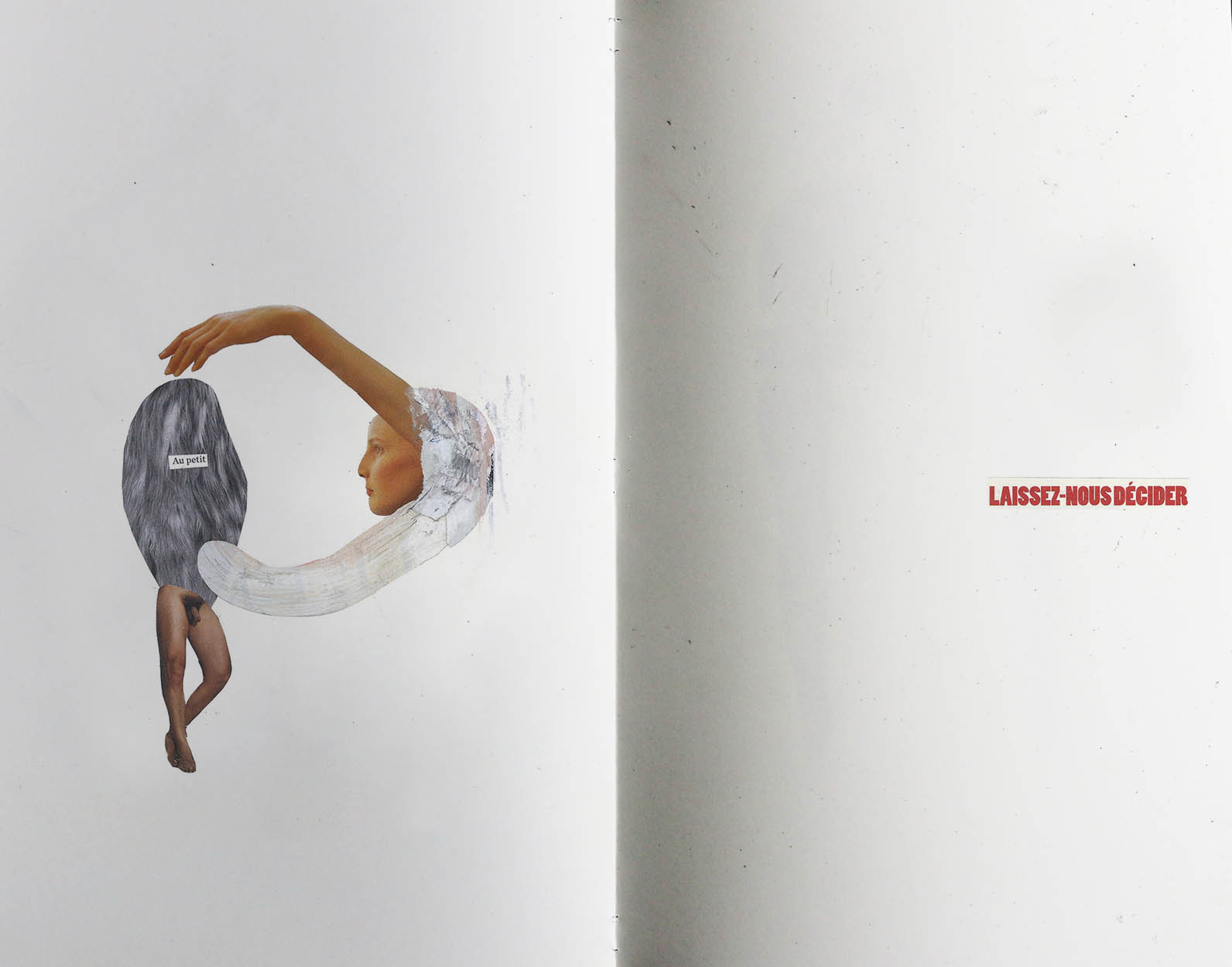
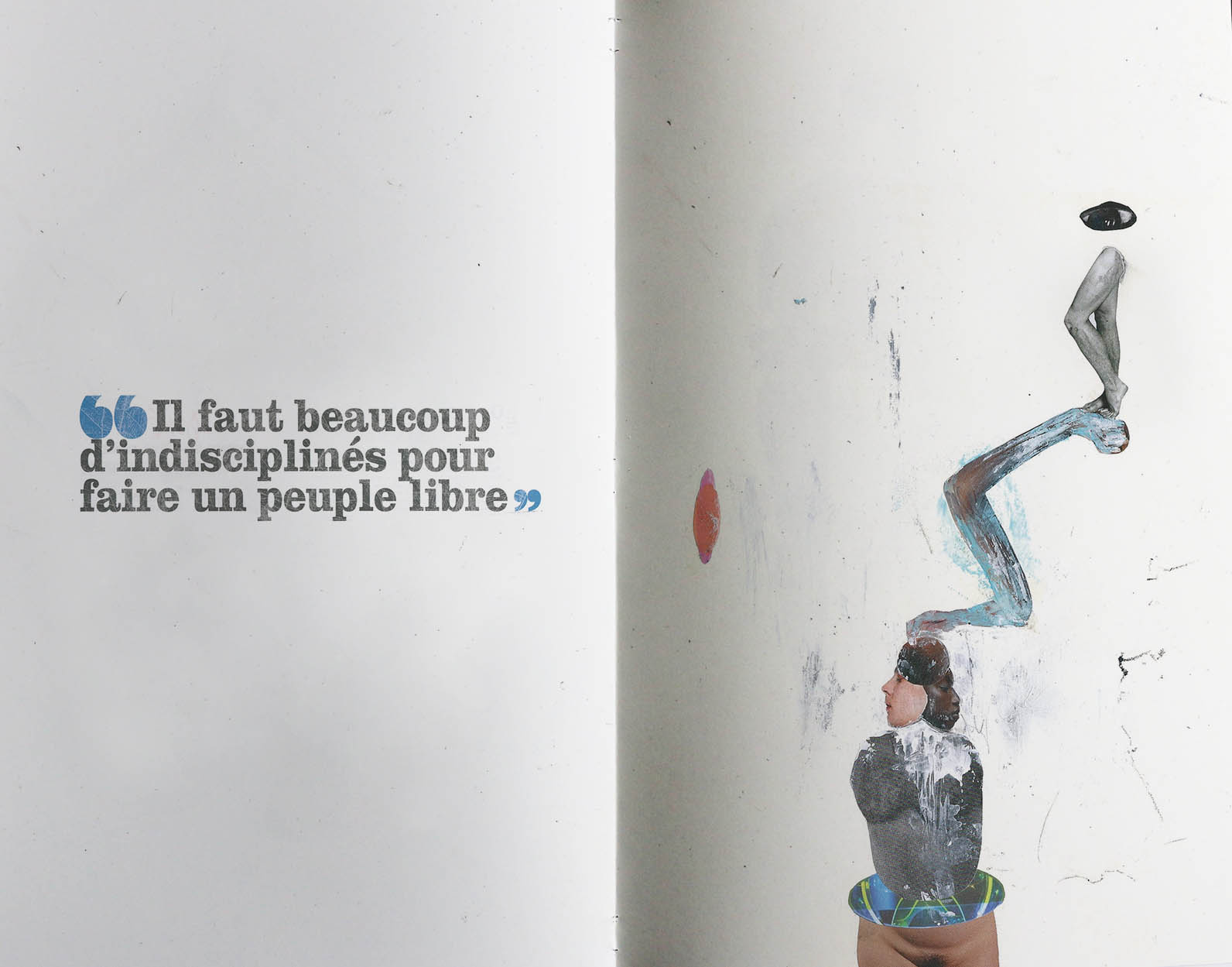
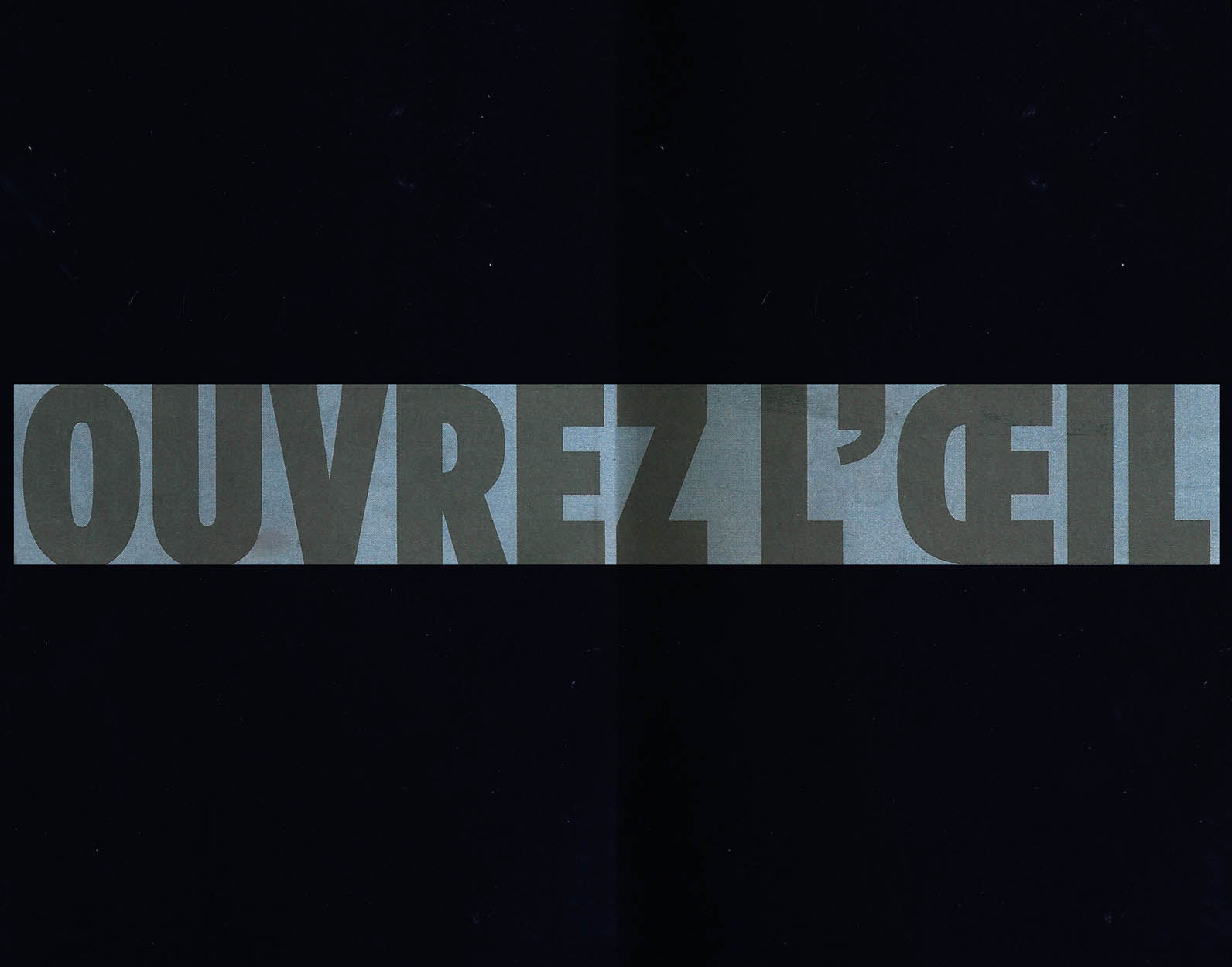
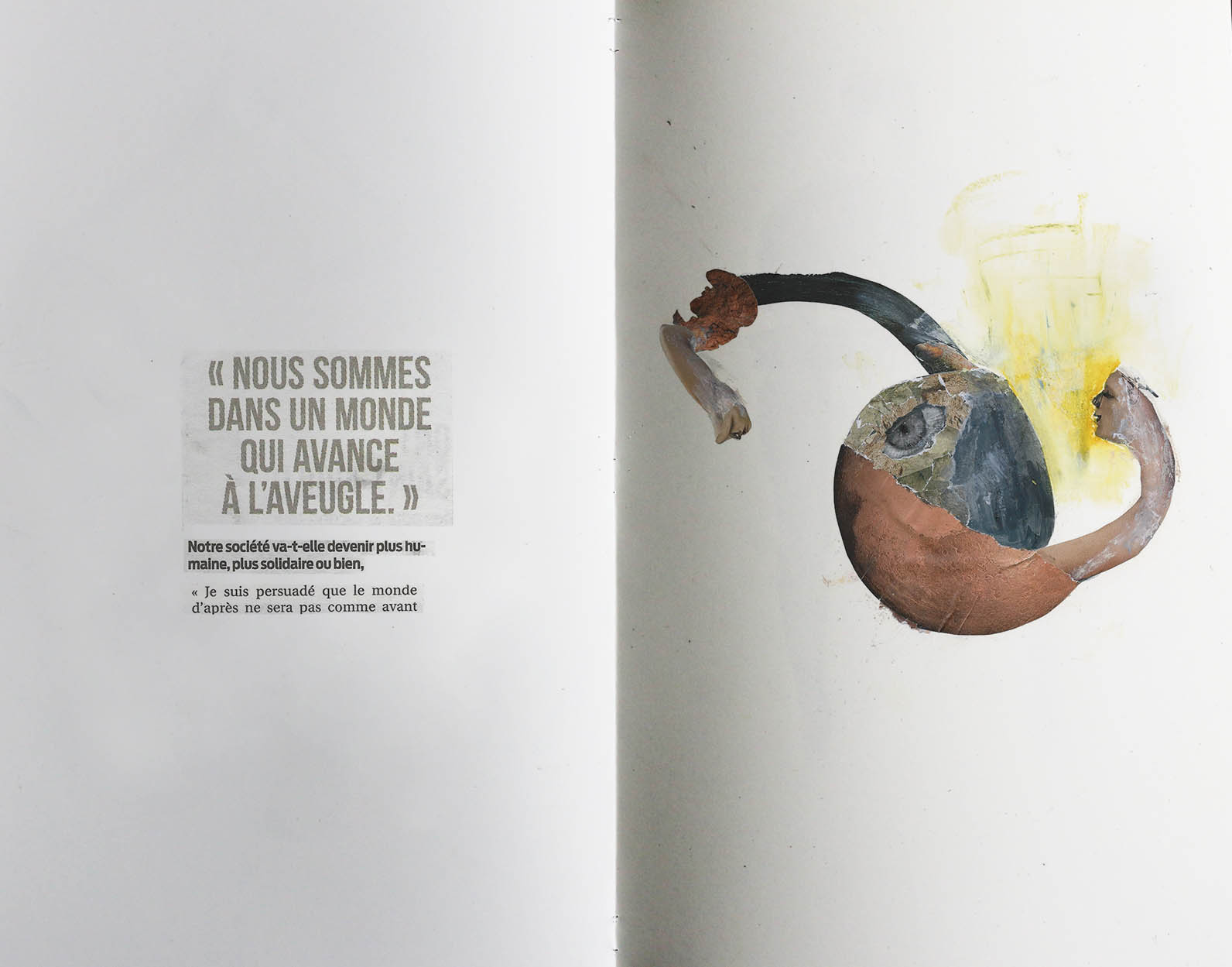
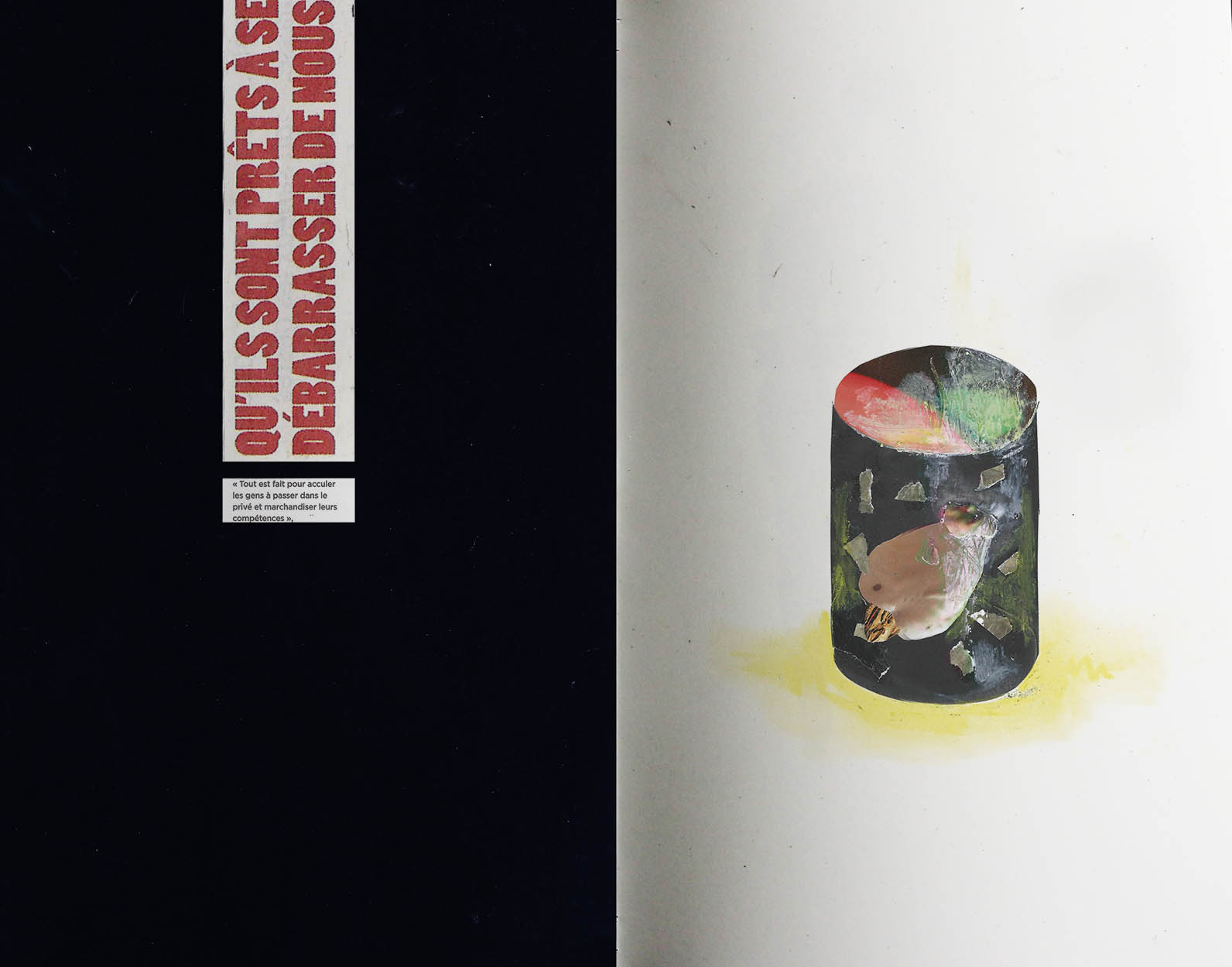
Although these remains evoke a lost civilization, they also mirror our contemporary condition. To express this connection, I collected newspaper articles over several weeks and extracted images from them to create collages.
1. Cratèrrien
One of the distinctive features of the Cratèrrien is the convergence of multiple forms, perhaps shaped by an isolated geographical environment.
This creature blends genders, sexes, nationalities, and many other attributes, generating mutant humanoid forms. It also incorporates elements of science and mechanics.
The Cratèrriens dedicated themselves to the development of their civilization until it reached its peak. In this sense, they are not so different from human beings, who, in their pursuit of economic and scientific progress, and in their desire for comfort and knowledge, place their own species at risk.
Paradoxically, the possibility of our survival may depend on returning to slowness and degrowth.
Among its central concerns is the question of origins, particularly through figures such as humanoids and artificial intelligence. In doing so, science fiction continually returns to a fundamental question: what are human beings?
Inevitably, that question also turns back toward me : who am I?
As I have said before, science fiction allows us to grasp the layered and complex nature of the world.
For « Cratèrrien » ,1 I drew inspiration from a ruined and abandoned site at the Plan d’eau. I conceived this area as a crater, a metaphor for both the birth and extinction of life, and from this space I developed a fictional narrative.
This site is imagined as the place where a civilization existed before the emergence of humanity. Each vestige holds a temporal and spatial depth, carrying with it a story. Together, these remnants testify to a perpetual migratory cycle in which civilizations rise, disappear, and are replaced by others.
Although these remains evoke a lost civilization, they also mirror our contemporary condition. To express this connection, I collected newspaper articles over several weeks and extracted images from them to create collages.
1. Cratèrrien
One of the distinctive features of the Cratèrrien is the convergence of multiple forms, perhaps shaped by an isolated geographical environment.
This creature blends genders, sexes, nationalities, and many other attributes, generating mutant humanoid forms. It also incorporates elements of science and mechanics.
The Cratèrriens dedicated themselves to the development of their civilization until it reached its peak. In this sense, they are not so different from human beings, who, in their pursuit of economic and scientific progress, and in their desire for comfort and knowledge, place their own species at risk.
Paradoxically, the possibility of our survival may depend on returning to slowness and degrowth.

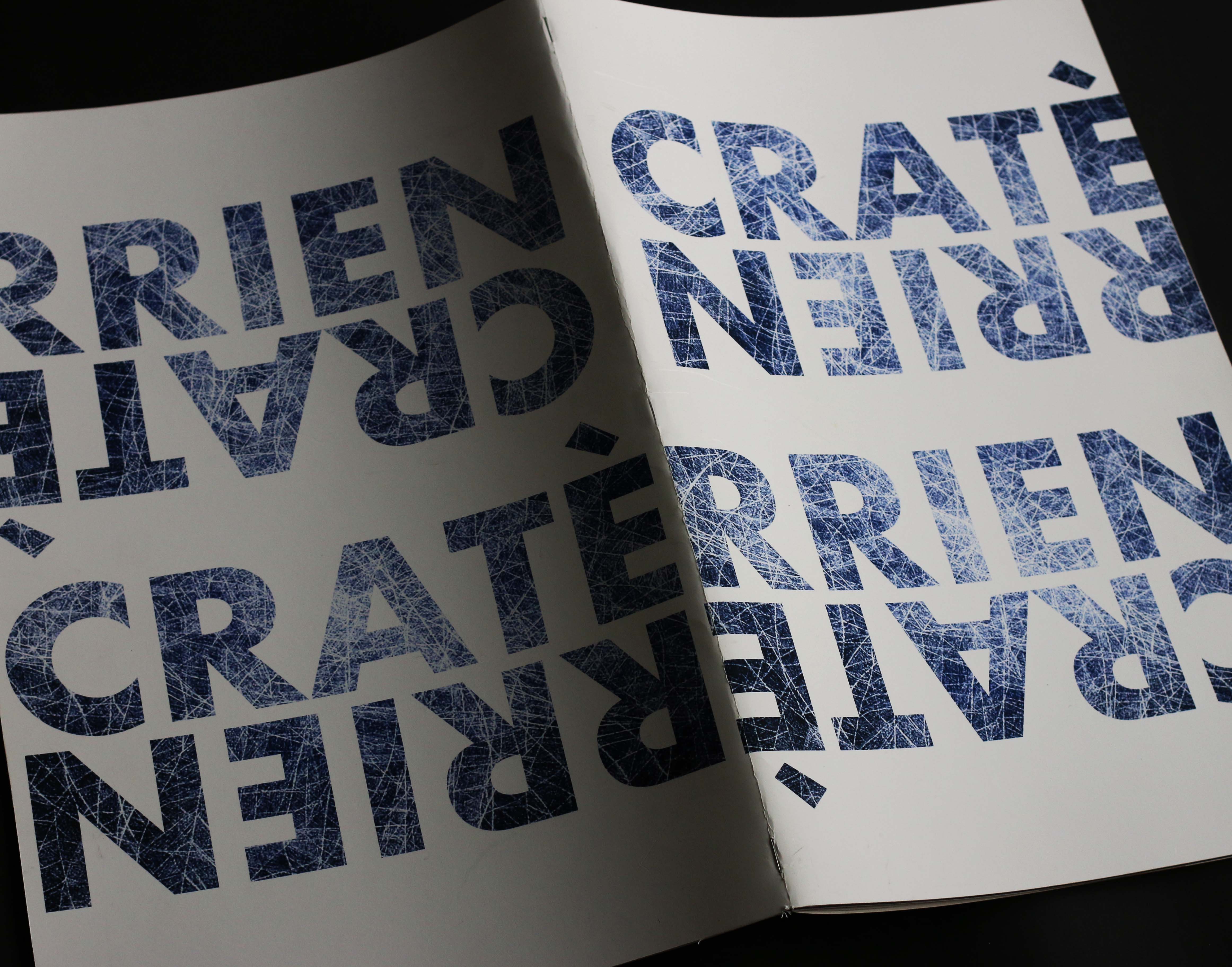
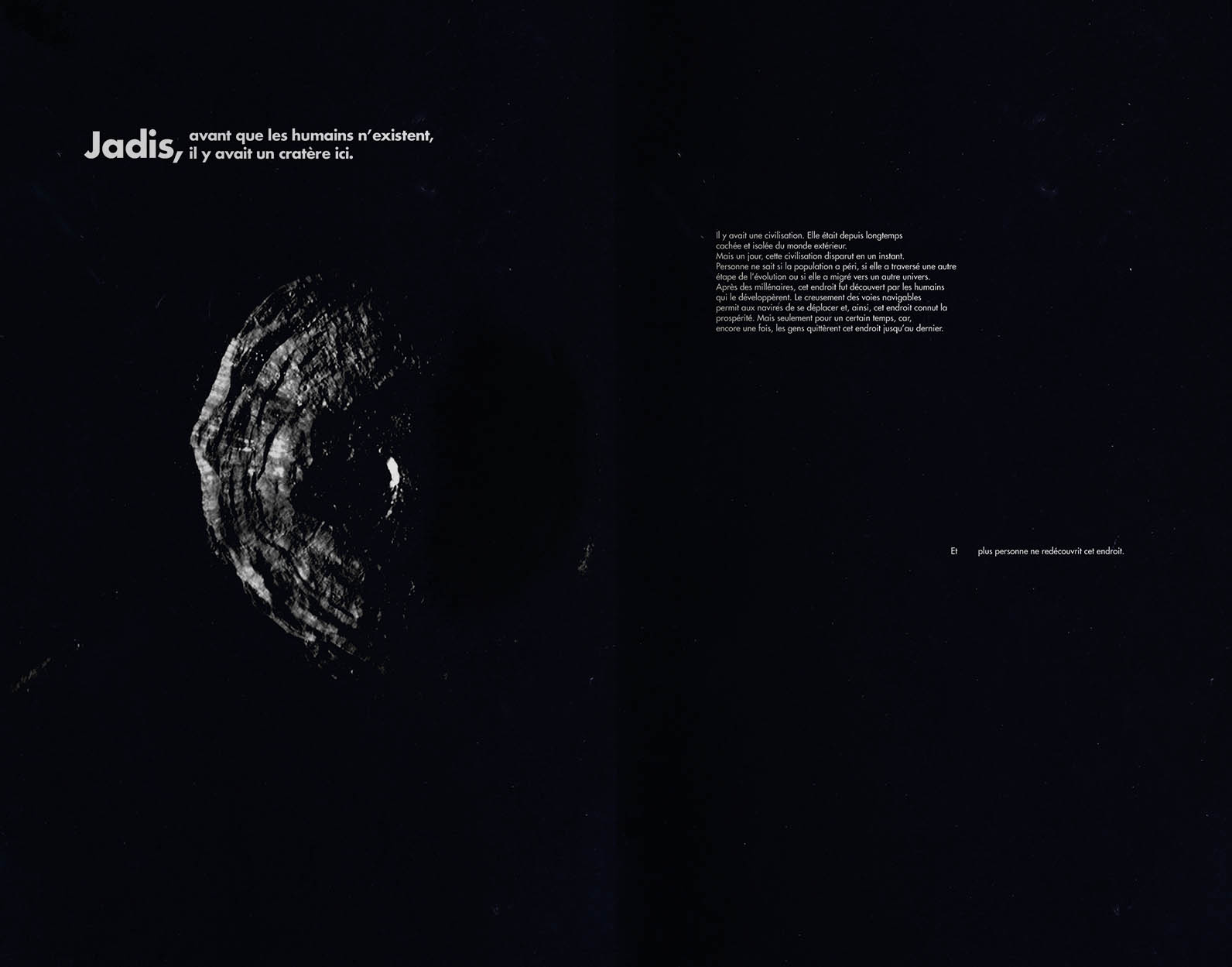
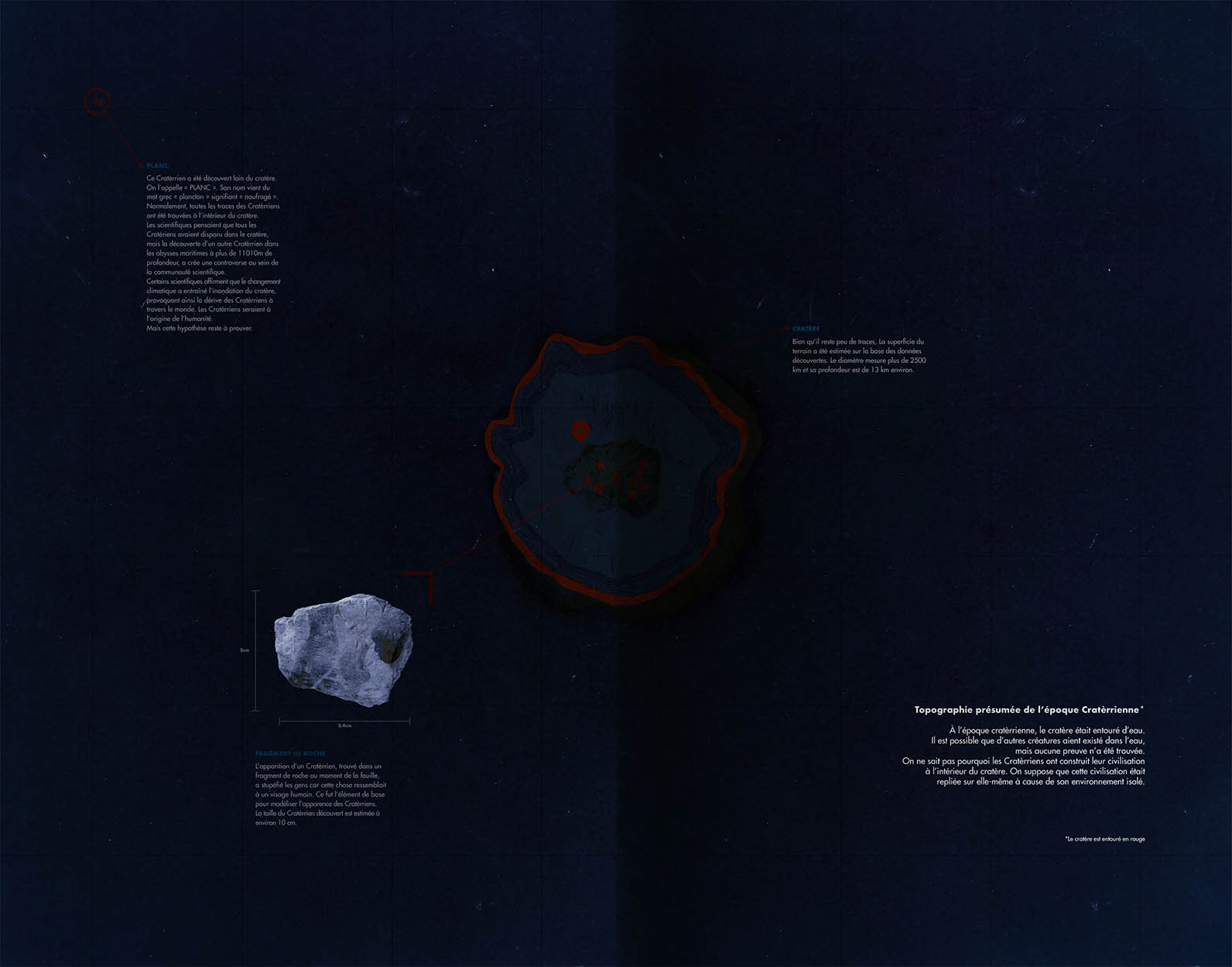
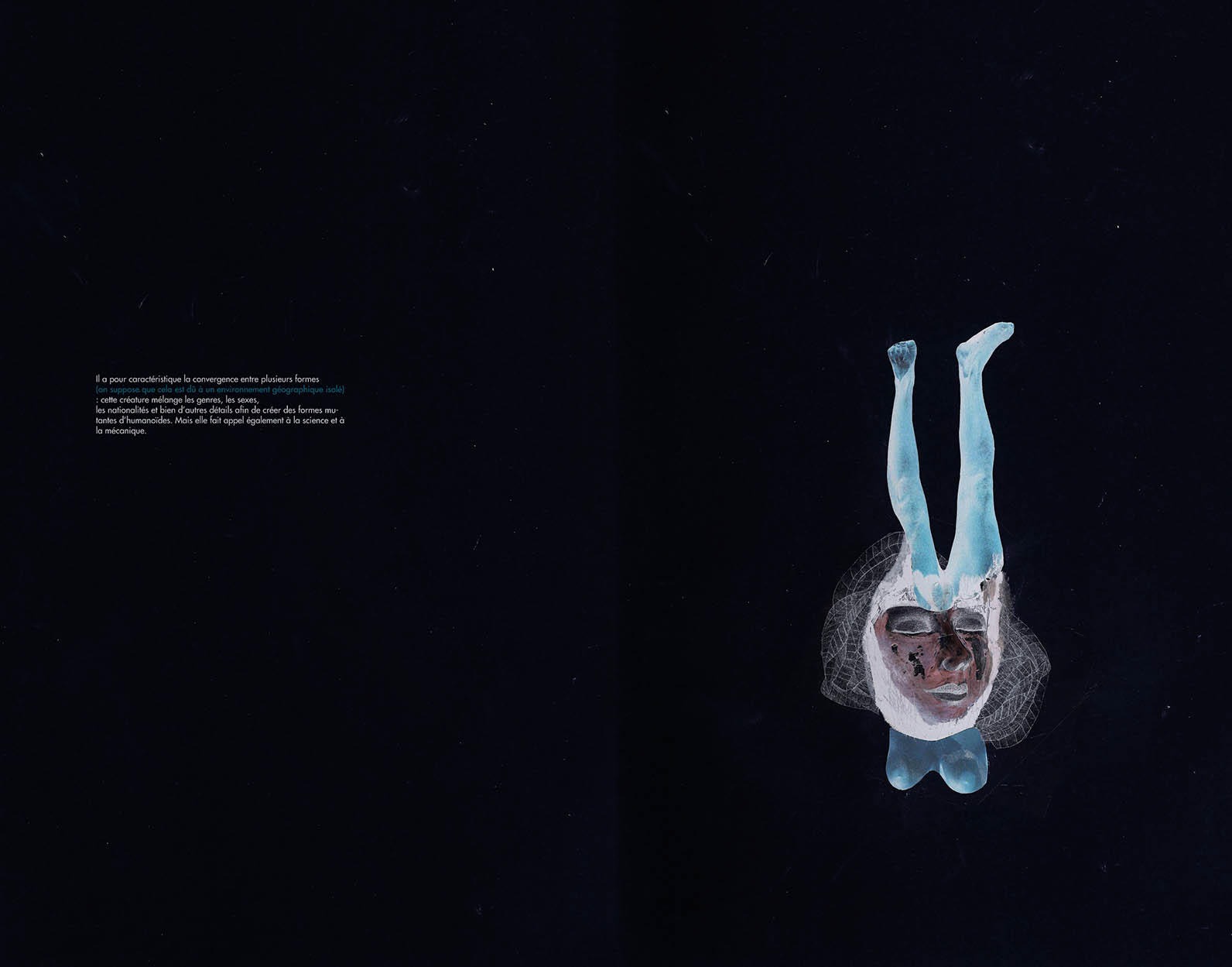
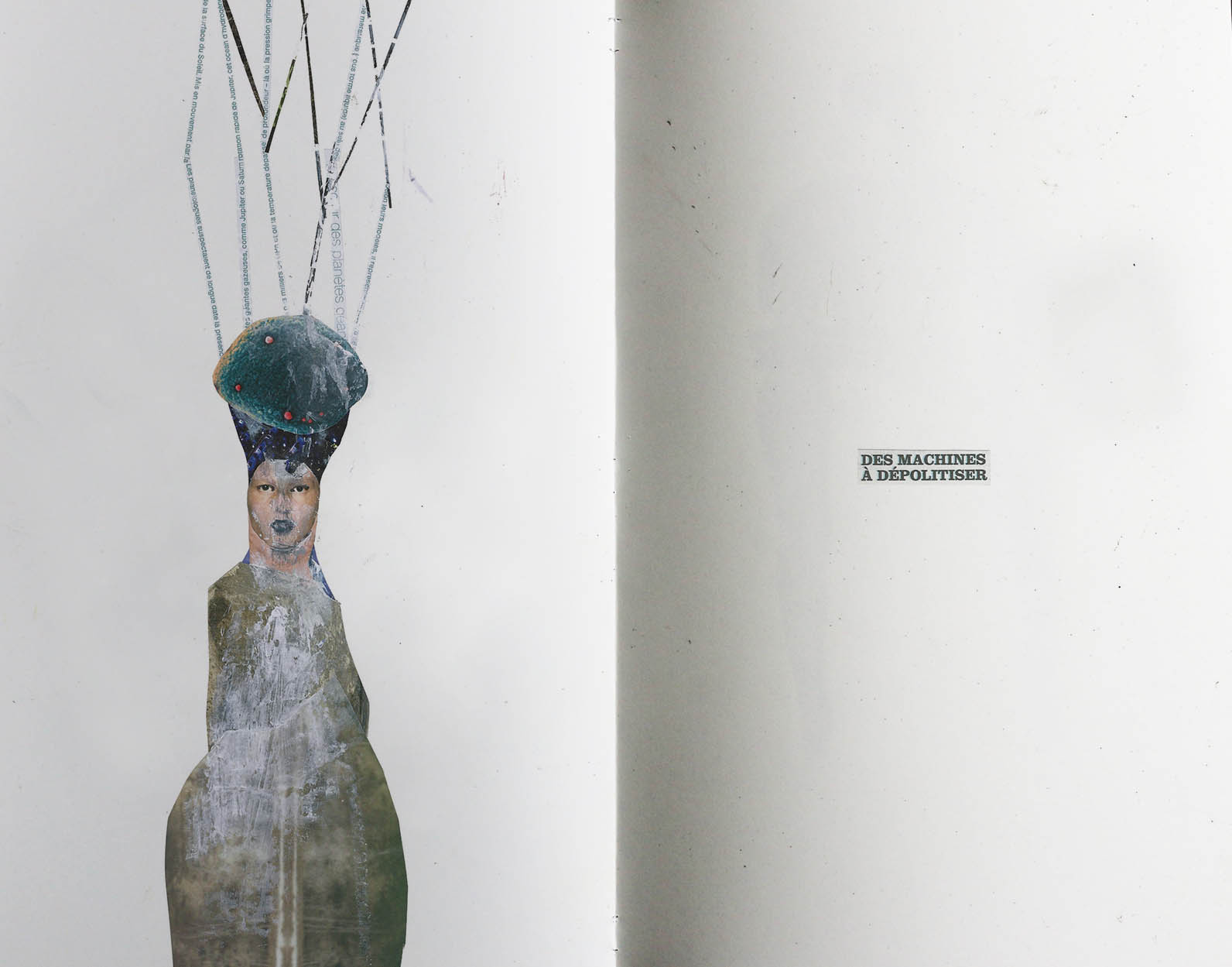
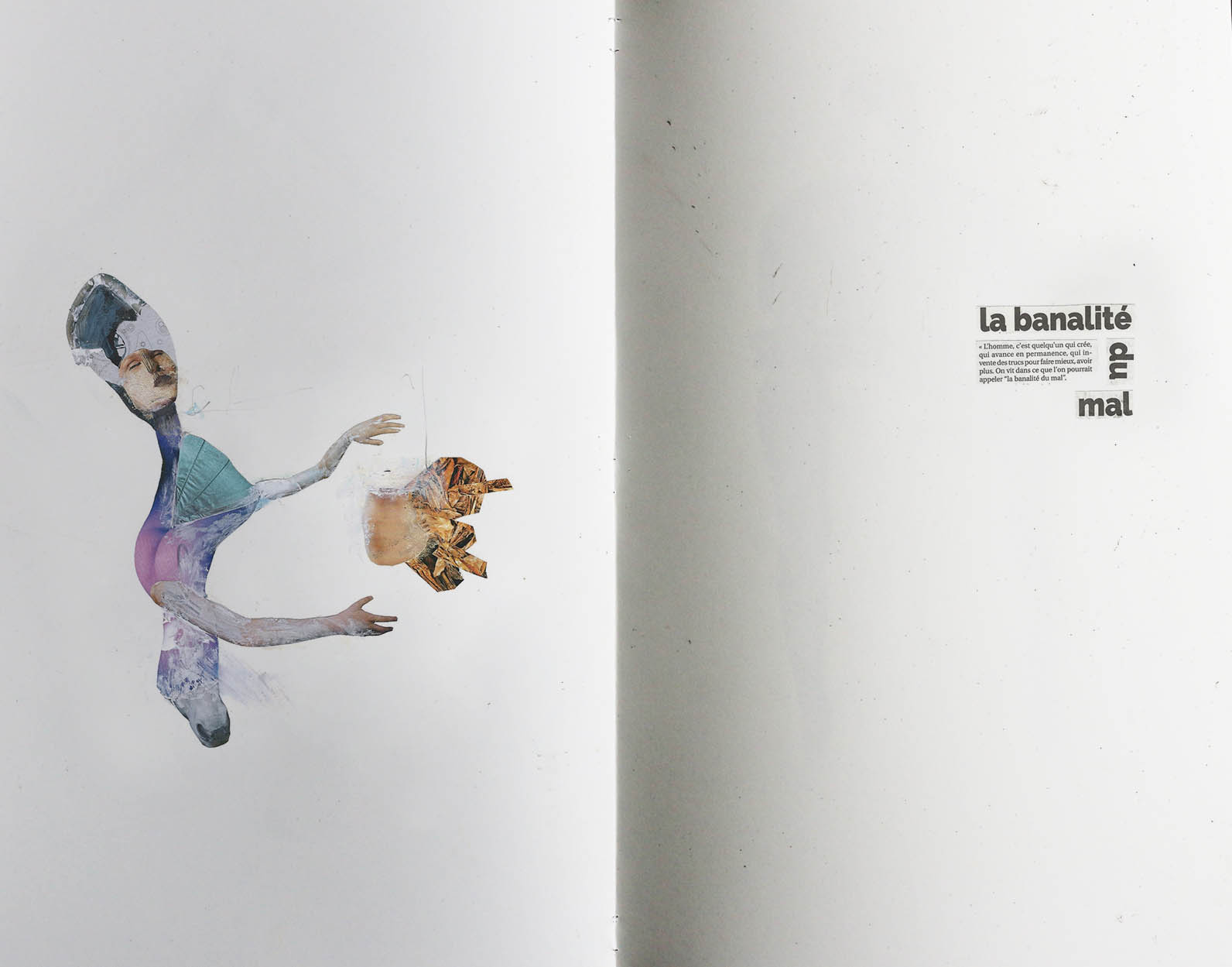
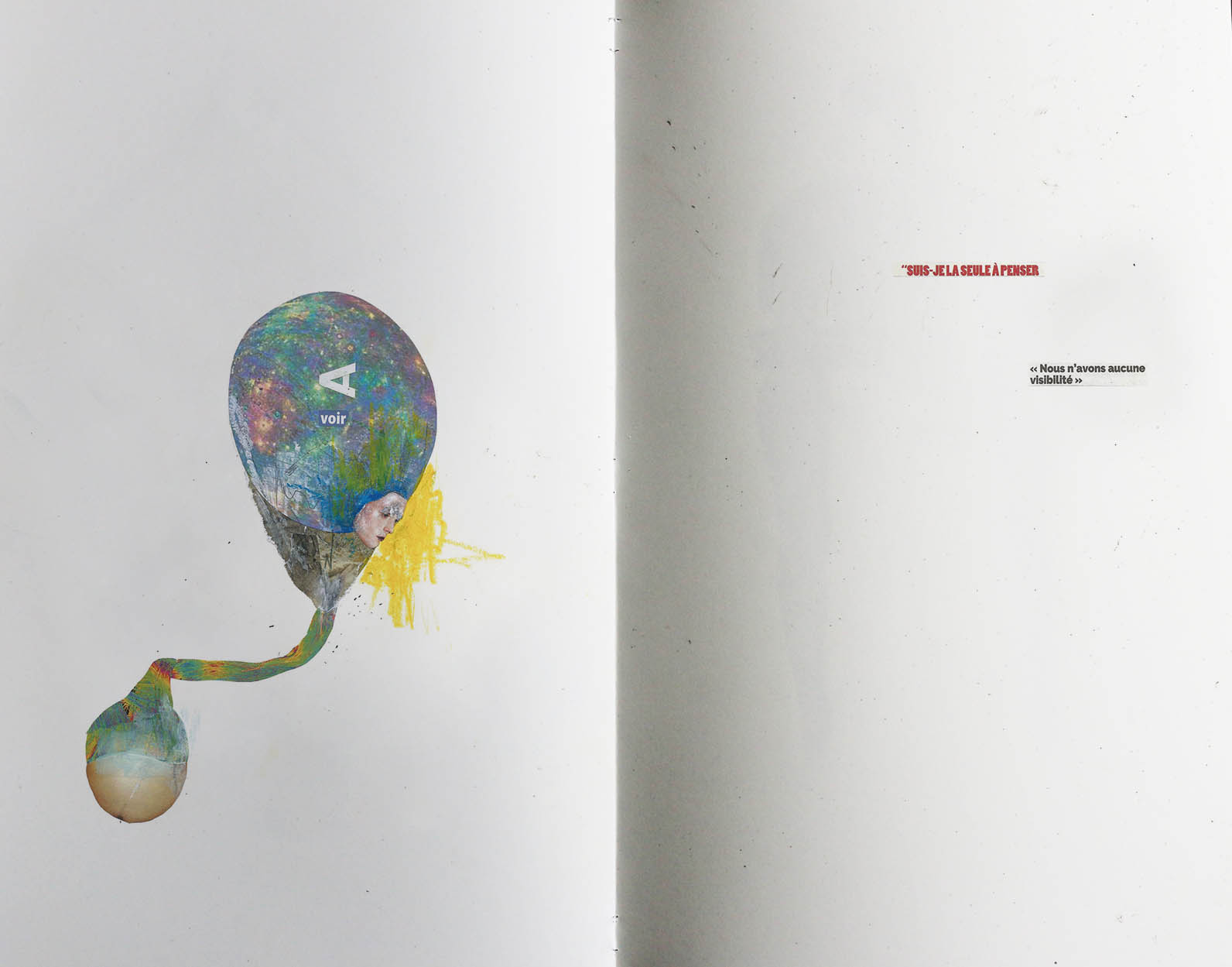
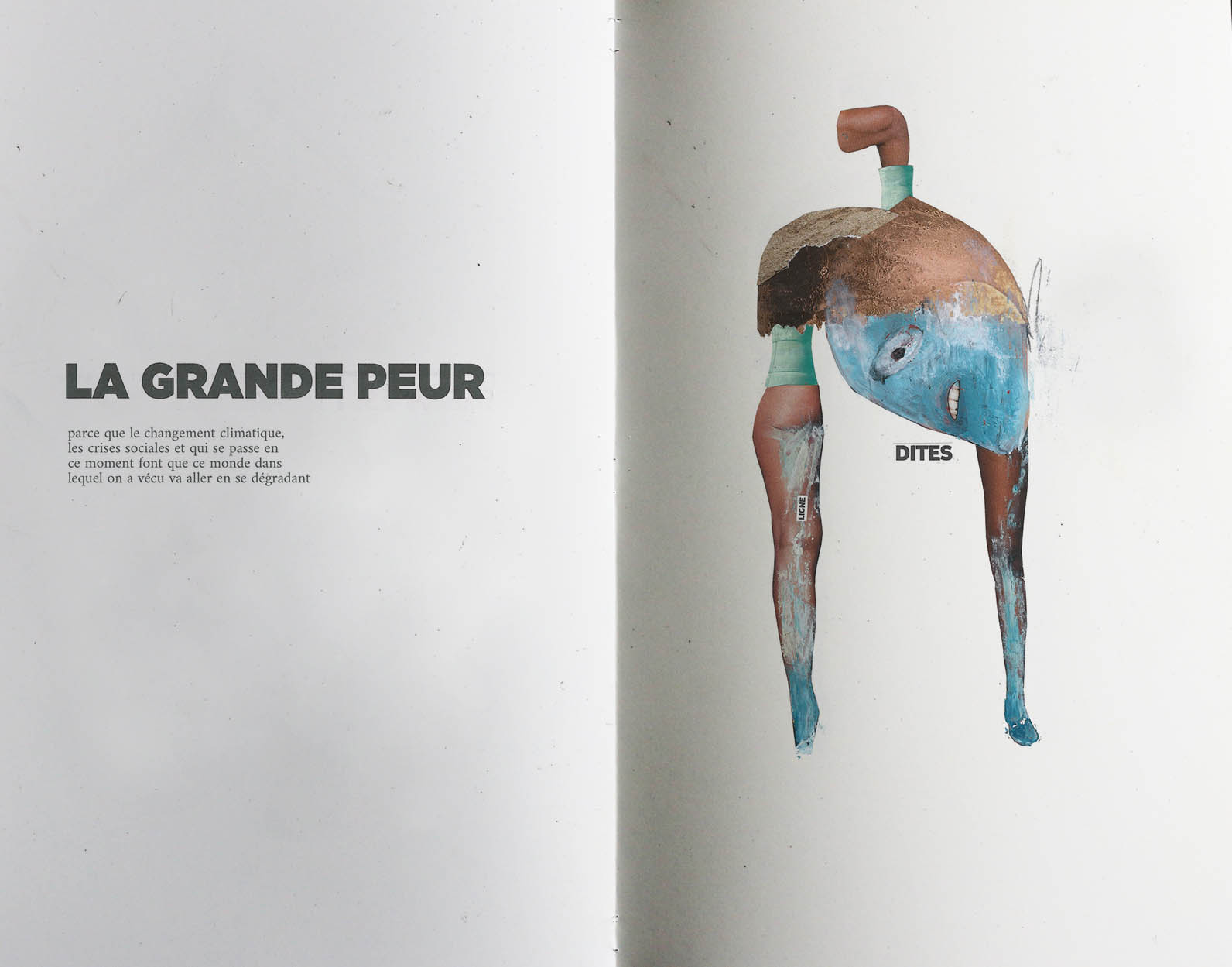
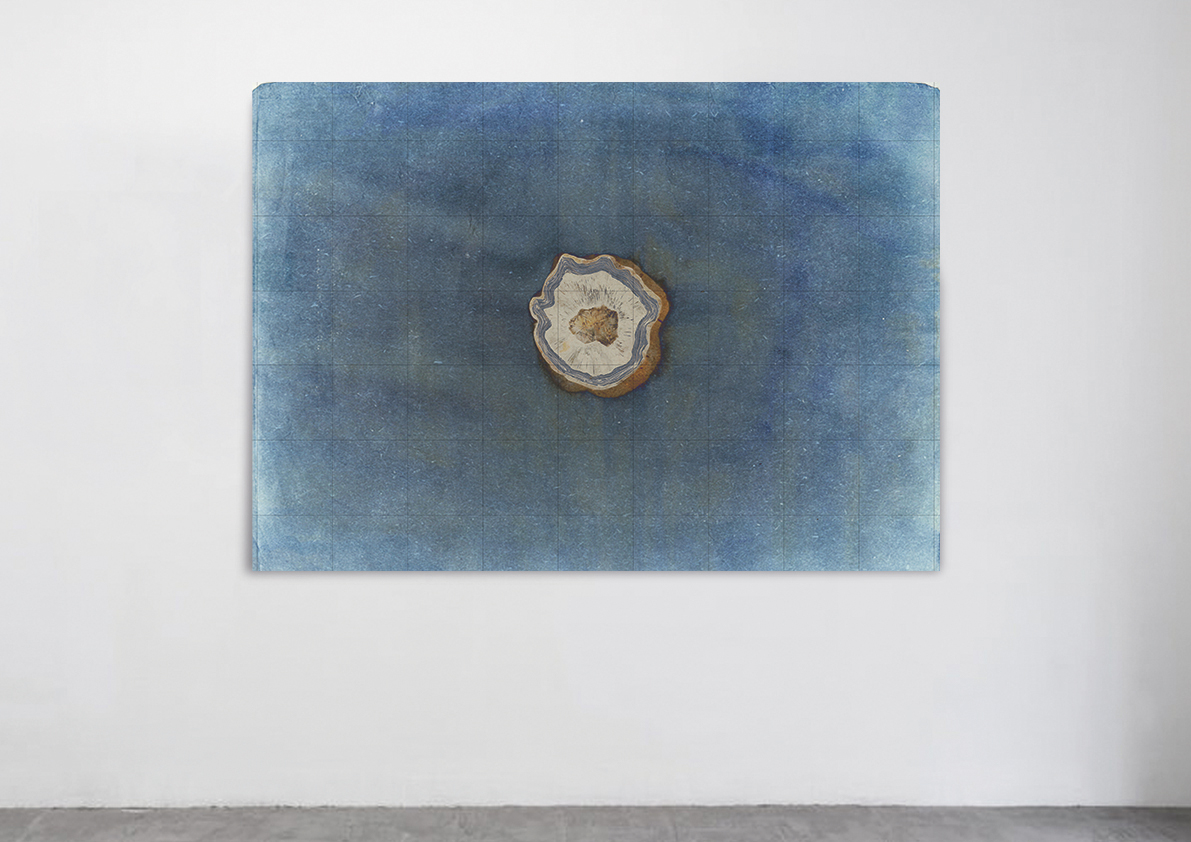
Cratèrrien, topography, mixed media, 118.9 × 84.1 cm, digital print, 2020
